
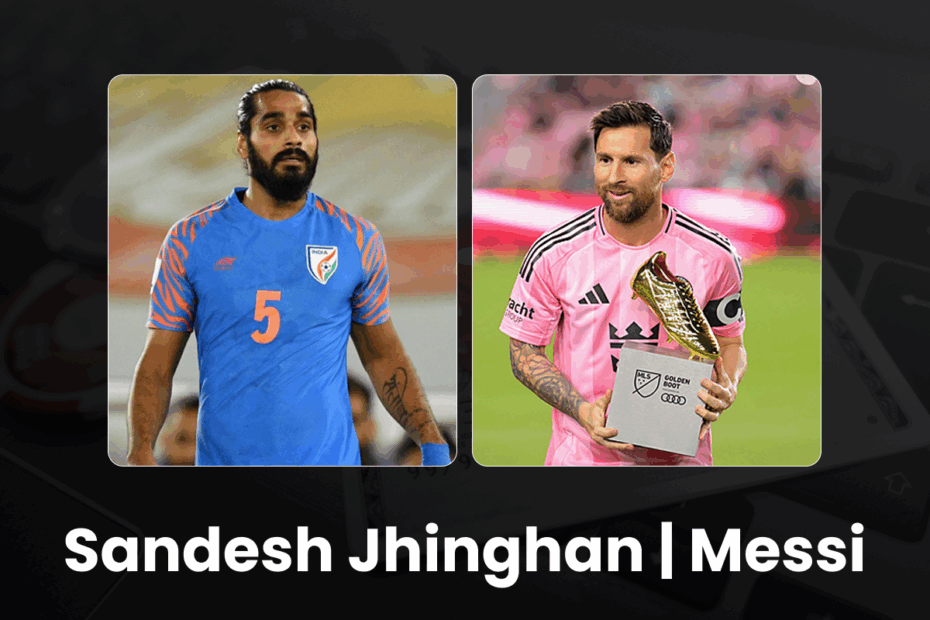
Indian footballer Sandesh Jhingan has sparked debate after openly questioning the large sums of money spent on Lionel Messi’s India tour, while the domestic football ecosystem continues to face uncertainty.
Lionel Messi concluded his four-day visit to India on Tuesday, during which he visited five cities. The extensive four-city GOAT India Tour was reportedly budgeted between ₹150 crore and ₹200 crore (roughly $18–$24 million), including appearance fees, logistics, security, and production costs. The tour generated massive excitement, packed stadiums, and widespread attention, with Messi even expressing his desire to return to the country in the future.
However, Jhingan believes the celebrations have overshadowed deeper concerns about Indian football.
Also Read: Premier League Dream Alive: Unai Emery’s Aston Villa Chase History
Concern Over Domestic Football’s Uncertain Future
Shortly after the tour ended, Jhingan voiced his concerns through a public statement. He highlighted that, despite the massive investment in hosting international stars, there is still no clarity on the start of the Indian Super League (ISL). According to him, the future of professional football in India currently hangs in the balance.
Jhingan acknowledged the nation’s passion for football and appreciated the enthusiasm shown by fans. He said he felt encouraged to see stadiums filled with supporters willing to spend large amounts to watch the sport.
“We Love Football, But Not Our Own Players”
However, the senior defender questioned whether Indian footballers receive the same level of support. He pointed out that at a time when the football system is struggling, and professional opportunities are uncertain, crores of rupees were spent on a single event.
Jhingan stated that while Indians clearly love football, they may not be doing enough to stand by their own players. He expressed concern that many footballers face unclear futures, limited contracts, and uncertainty about employment, even as massive sums continue to be spent on promotional events.
Taking Responsibility for National Team Struggles
Jhingan also addressed criticism of the Indian national team’s recent performances. He admitted that the results have not been good and accepted responsibility as one of the most experienced players in the squad. He emphasised that players must be accountable for their performances on the pitch.
Despite the criticism and challenges, Jhingan remained optimistic. He expressed hope that Indian football will overcome its current struggles and return stronger with better planning, support, and structure.
Also Read: Most Assists This Season: Bruno Fernandes on Top for Manchester United
A Call for Balance and Long-Term Vision
Jhingan’s comments underline a broader issue facing Indian football: the need to balance global exposure with sustainable domestic growth. While international events bring attention and excitement, he believes long-term investment in leagues, players, and infrastructure is essential to secure the future of the sport in the country.
FAQs
1. Why did Sandesh Jhingan criticise the Messi India tour?
Sandesh Jhingan raised concerns about the large amount of money spent on Lionel Messi’s India tour while Indian football faces uncertainty, including delays around the Indian Super League.
2. How much money was spent on Lionel Messi’s India tour?
Reports suggest that the Messi India tour cost between ₹150 crore and ₹200 crore, covering appearance fees, logistics, security, and event management.
3. What is Jhingan’s main concern?
Jhingan believes that while Indians love football, there is not enough long-term support for domestic players, leagues, and the overall football ecosystem.
4. Did Jhingan accept responsibility for India’s poor performances?
Yes. Jhingan acknowledged that the Indian national team has not performed well recently and accepted responsibility as one of the senior players.
5. What did Jhingan say about Indian football’s future?
He stated that Indian football is going through one of its most difficult phases and stressed the need for sustainable investment rather than one-off events.

