
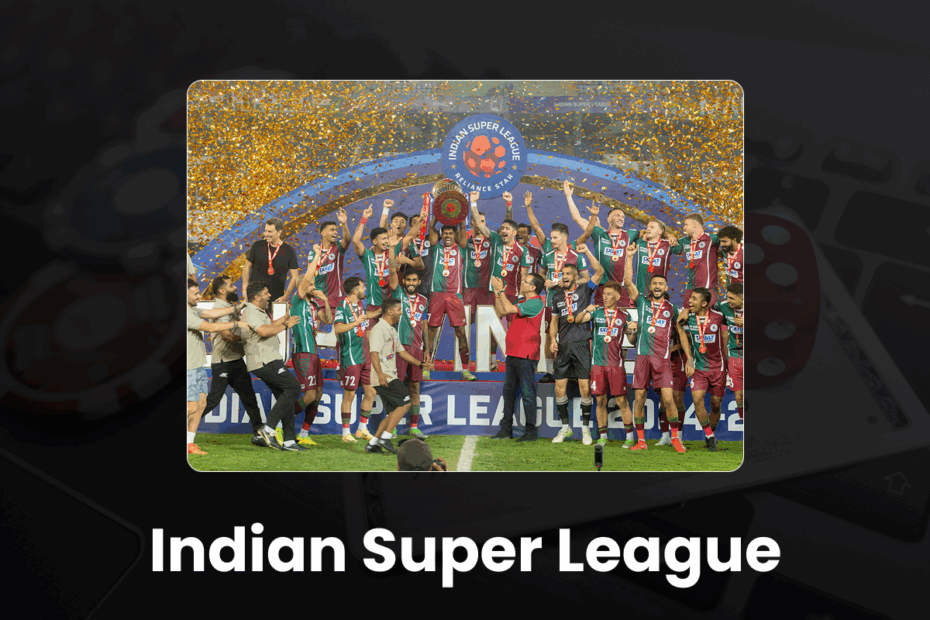
Indian football has entered the most uncertain phase in its modern history. For the first time, the country’s two highest men’s competitions Indian Super League (ISL) and the I-League, face serious structural instability at the same time. What began as a policy shift regarding government funding has now escalated into a wider commercial and operational crisis across the football ecosystem.
Through this article on 96 APK, we explain the current crisis in Indian football, including ISL funding issues, I-League uncertainties, and the impact on players moving abroad.
Also Read: Fulham vs Nottingham Forest Preview, Betting Tips & Odds, Prediction – 23 Dec 2025
Pre-ISL Era: Limited Money but Predictable Structure (Before 2014)
Before the launch of the ISL, Indian football operated with limited financial resources but within a relatively stable framework. In 2010, the average Indian footballer earned between ₹10 and ₹15 lakh annually. The I-League served as the top-tier competition, and clubs depended mainly on public sector units, state associations, or private owners.
Although player salaries remained low, clubs and players understood the system. Leagues ran regularly, contracts were honoured, and football functioned within defined boundaries.
ISL Launch and the Financial Upsurge (2014-2019)
The introduction of the Indian Super League in 2014 transformed Indian football. The league brought centralised commercial rights, strong corporate backing, and unprecedented visibility to the sport. Clubs gained financial security, broadcasting improved, and sponsorships increased sharply.
By 2019, the financial landscape had changed completely. Average ISL player salaries rose to ₹20-50 lakh per year, while top Indian players earned between ₹1 crore and ₹3 crore annually. Foreign signings elevated the league’s quality, and football became a full-time professional career for many Indian players.
Expansion Phase: Rapid Growth Across Divisions (2020-2023)
Between 2020 and 2023, Indian football expanded aggressively. The AIFF introduced multiple new competitions, including I-League 2, I-League 3, and Indian Women’s League 2, while state leagues expanded nationwide. In total, Indian football added more than seven structured competitions during this period.
Lower-division players earned between ₹5 and ₹10 lakh annually, which allowed more athletes to sustain professional careers. On the surface, Indian football appeared stronger and more inclusive than ever before.
Also Read: The Managerial Merry-Go-Round: Who is Next in Line for the Real Madrid Hot Seat?
2024-25: The Moment the Structure Began to Crack
The 2024-25 season marked a decisive turning point. The Sports Ministry clarified its position on professional football and announced that it would not financially support the ISL. Officials stated that the ISL operated as a private commercial league and that government funds must prioritise grassroots development, Olympic sports, and national federations.
This decision removed indirect institutional security from the ISL and forced clubs to rely entirely on commercial revenue.
ISL Decline: Clear Indicators of Financial Stress
After the funding withdrawal, the impact on ISL clubs became immediate and measurable. Club budgets declined by an average of 20 to 35%. Many franchises reduced their foreign signings from six or seven players to three or four. Clubs replaced long-term contracts with short-term deals, and reports of delayed salary payments surfaced across multiple teams.
Matchday attendance stagnated, particularly in non-metro cities. Broadcast engagement also declined as the league lost several marquee players. The centralised ISL model, which had previously protected clubs, now exposed their dependence on external financial backing.
I-League Commercial Collapse: No Bidders, No Safety Net
The crisis deepened significantly in late 2025 when the All India Football Federation failed to secure a commercial partner for the I-League. On 28 November, the AIFF issued a Request for Proposal to sell commercial rights for the I-League system. The federation set 14 December as the deadline.
When officials opened the bids, no company had submitted an offer.
The AIFF valued the combined rights at ₹6 crore, ₹4 crore for the I-League, ₹1.25 crore for I-League 2, and ₹75 lakh for I-League 3. The federation required potential bidders to have a net worth of ₹30 crore. Despite these relatively low entry barriers, no company participated. Officials confirmed that no one attended the pre-bid meeting and that no formal queries were raised.
At the same time, ISL commercial rights stood valued at ₹37.5 crore annually. The Indian Women’s League received only one bid of ₹5 crore, and even that agreement remained unsigned. The 15-year master rights agreement between AIFF and FSDL officially ended on 8 December, leaving Indian football without long-term commercial protection.
You can visit the 96 app for more updates related to Burnley FC season tickets or Burnley Betting.
Impact on Clubs: Football Comes to a Halt
The absence of commercial partners immediately affected clubs. Several I-League teams suspended training due to uncertainty. Club officials questioned whether competitions would even take place during the season. Players, staff members, and employees faced job insecurity.
Some I-League clubs began discussing legal options, including approaching the Supreme Court, as the Sports Ministry prepared to submit its report. For the first time, Indian clubs did not know which competition they would play or when their season would begin.
Player Exodus: Stability Lies Outside India
As domestic uncertainty grew, Indian players began seeking stability abroad. This shift did not reflect ambition alone; it reflected survival and career planning.
- Aashir Salim signed a professional contract with Al-Sailiya SC in Qatar to secure regular competition.
- Tahsin Mohammed Jamshid featured for Al Duhail and reached international recognition, eventually earning a national call-up.
- Yohaan Benjamin joined NK Bravo in Slovenia and became the first Indian footballer to appear in the UEFA Youth League.
- Abneet Bharti built his career across Portugal, Poland, Mexico, Argentina, and Bolivia before entering national team camps.
- Kabir Nath and Aniket Bharti also continued their development in Europe and South America.
Indian players no longer viewed overseas moves as risky. They viewed domestic instability as the greater risk.
The Present Reality
Indian football does not suffer from a lack of talent. It suffers from structural, commercial, and administrative instability. The ISL faces sustainability questions without institutional backing. The I-League currently operates without a commercial partner. Clubs struggle to plan, and players search for security beyond India’s borders.
The decisions taken next will define whether Indian football rebuilds its foundation or continues to lose ground at its most critical moment.
FAQs
Q1: Why is the ISL facing a funding crisis?
The Sports Ministry stopped funding the ISL, stating that private leagues must operate financially independently.
Q2: What happened to the I-League commercial rights?
AIFF received no bids for I-League rights, leaving the league’s future uncertain.
Q3: How has this affected Indian players?
Players like Aashir Salim, Tahsin Jamshid, and others are moving abroad for stability and better competition.
Q4: Which countries are Indian players moving to?
Players have moved to Qatar, Slovenia, Portugal, Poland, Mexico, Argentina, Bolivia, and other overseas leagues.
Q5: What is next for Indian football leagues?
The AIFF awaits Sports Ministry guidance, while clubs and players adjust to financial uncertainty and explore alternate opportunities.
